The effects of storage methods and microbiological factors on banana post-harvest deterioration
Keywords:
Banana deterioration, microbial spoilage, post-harvest storage, Aspergillus Niger, Rhizoctonia solani, shelf-life extension, food preservation techniques.Abstract
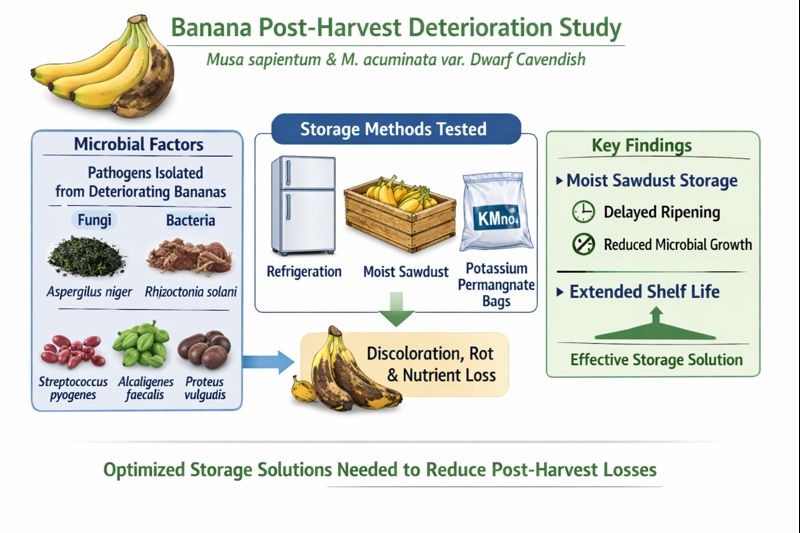
This study investigates the microbial factors contributing to the post-harvest deterioration of bananas (Musa sapientum and M. acuminata var. dwarf Cavendish) and evaluates storage methods for extending their shelf life. Fungi such as Aspergillus niger and Rhizoctonia solani and bacteria including Streptococcus pyogenes, Alcaligenes faecalis, and Proteus vulgaris were isolated from deteriorating banana samples. These microorganisms were identified as significant contributors to the degradation process, causing discoloration, rot, and nutrient loss. The study also compared the efficacy of storage techniques, including refrigeration, embedding in damp sawdust, and packaging with potassium permanganate-treated polythene bags. Results showed that embedding bananas in moist sawdust delayed ripening and prevented microbial growth, extending shelf life significantly compared to other methods. This research highlights the need for optimized storage solutions and stringent quality control measures to reduce post-harvest losses and improve marketability