Stimuli-Responsive Drug Delivery Systems: Design Strategies, Mechanisms, and Clinical Translation
Keywords:
Stimuli-responsive drug delivery; Smart drug delivery systems; Nanomedicine; Controlled release; pH-responsive systems; Redox-responsive systems; Thermosensitive liposomes; Drug targetingAbstract
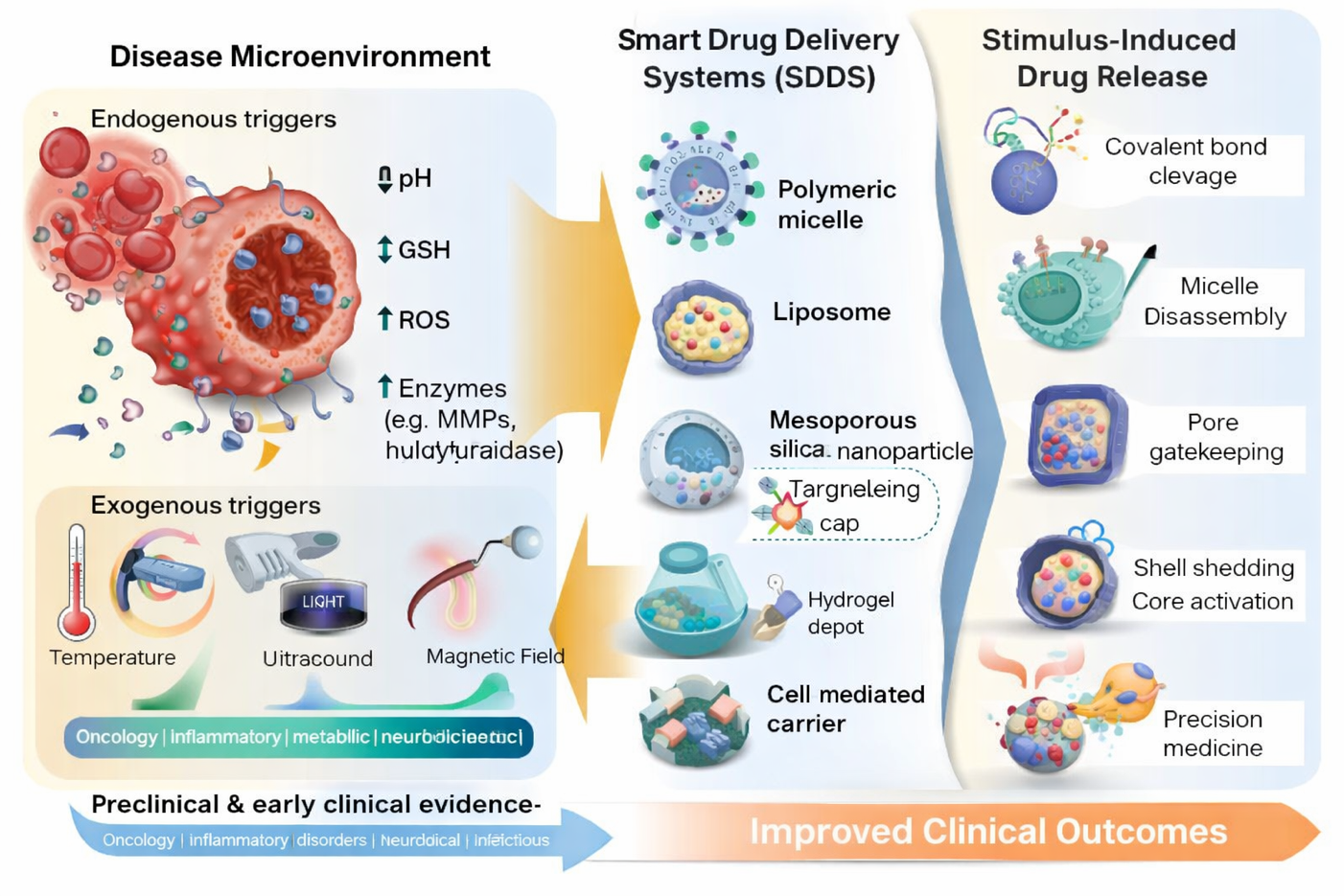
Conventional drug delivery systems often lack spatial and temporal control, leading to nonspecific distribution, subtherapeutic drug concentrations at target sites, and dose-limiting toxicities in healthy tissues. These limitations are particularly pronounced for modern therapeutics such as peptides, proteins, nucleic acids, and poorly soluble small molecules. Stimuli-responsive drug delivery systems (SDDS), also known as smart drug delivery systems, have emerged as a promising strategy to address these challenges by enabling site-specific and controlled drug release in response to internal or external triggers.This review provides a comprehensive overview of the design principles, materials, mechanisms, and translational landscape of SDDS. Stimuli are broadly classified into endogenous triggers, including pH gradients, redox potential, enzymes, reactive oxygen species, hypoxia, and metabolites, and exogenous triggers such as temperature, light, ultrasound, magnetic fields, and mechanical forces. The article discusses key carrier platforms, including polymeric micelles and nanoparticles, liposomes, inorganic nanoplatforms, hydrogels, electrospun nanofibers, biomacromolecular systems, and cell-mediated carriers. Mechanistic pathways of stimulus-induced release, such as covalent bond cleavage, conformational transitions, pore gatekeeping, and multi-stage disassembly, are examined in relation to pharmacokinetics, biodistribution, and therapeutic index.Preclinical and early clinical evidence across oncology, inflammatory disorders, metabolic diseases, neurological conditions, and infectious diseases is critically evaluated. Despite strong experimental support, clinical translation remains limited due to biological heterogeneity, manufacturing complexity, regulatory challenges, and the need to demonstrate clear clinical benefit. Future progress will depend on simplified and scalable design, robust characterization, patient stratification, and integration with precision medicine and artificial intelligence.