Optimizing Nanocarrier-Based Ocular Drug Delivery Systems with the Help of Software Design Experts: A Thorough Analysis with Prospects for the Future
Keywords:
Software Design, Box–Behnken Design, Optimization, Central Composite Design, Quality by Design, Data Modeling.Abstract
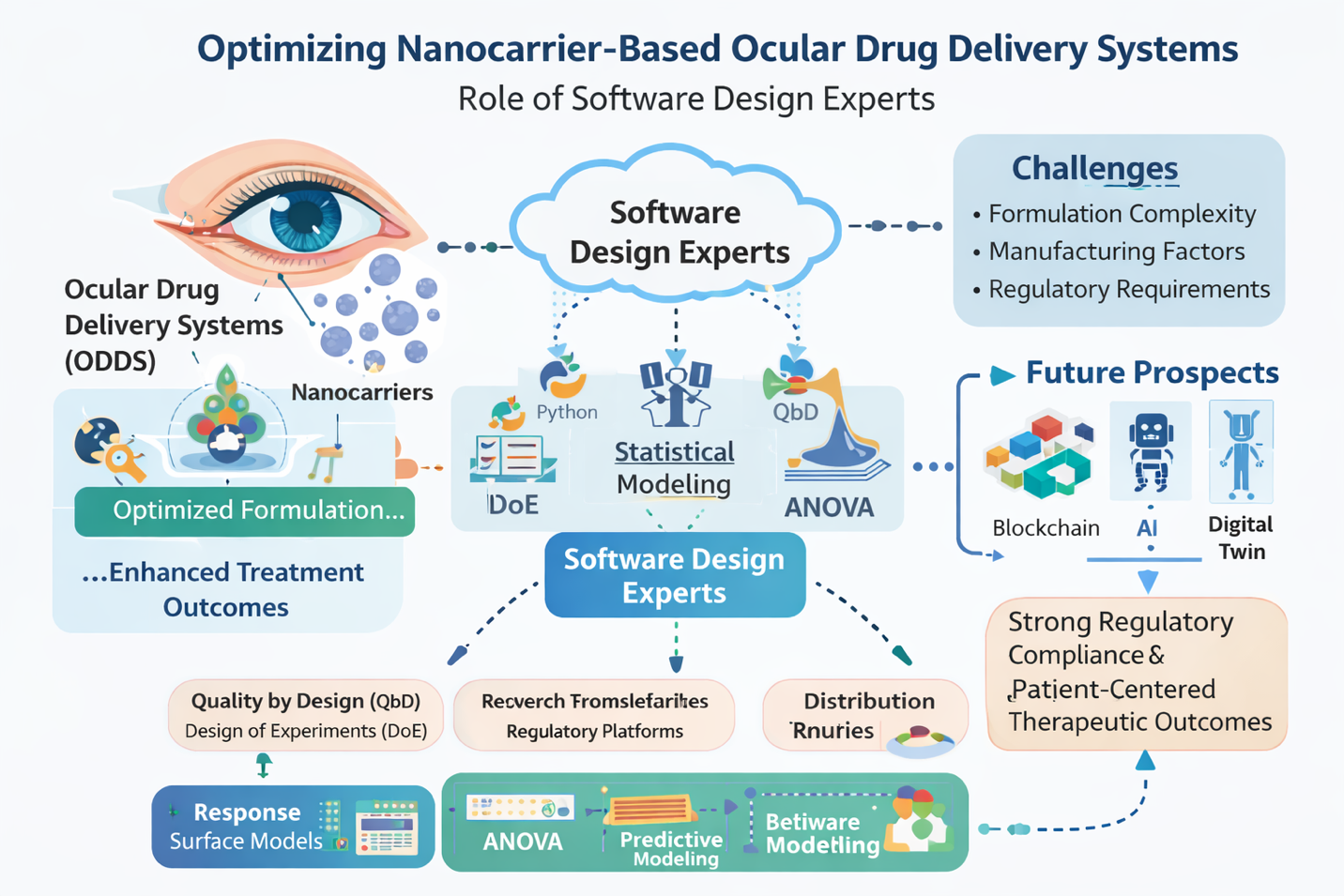
In ophthalmology developments in ocular drug delivery systems (ODDS), especially formulations based on nanocarriers, have greatly enhanced treatment results. Notwithstanding these advantages, the creation and refinement of nanocarrier systems entail a complicated interaction between manufacturing factors, formulation variables, and regulatory considerations. Through the integration of computational tools, statistical modeling methodologies, and simulation platforms that improve formulation accuracy, efficiency, and reproducibility, software design specialists have become essential contributors to this process. Using techniques like Quality by Design (QbD), Design of Experiments (DoE), and different factorial and response surface models, this article thoroughly examines the role of software design experts in optimizing nanocarrier-based ODDS. The article also analyzes distribution routes, looks at clinical case studies, and talks about statistical methods like ANOVA and predictive modeling. Prospects for the future are also discussed, such as the application of blockchain, digital twin systems, and artificial intelligence to medication development. In addition to speeding up the medication development process, this interdisciplinary collaboration between software engineering and pharmaceutical sciences guarantees strong regulatory compliance and patient-centered therapeutic results.